
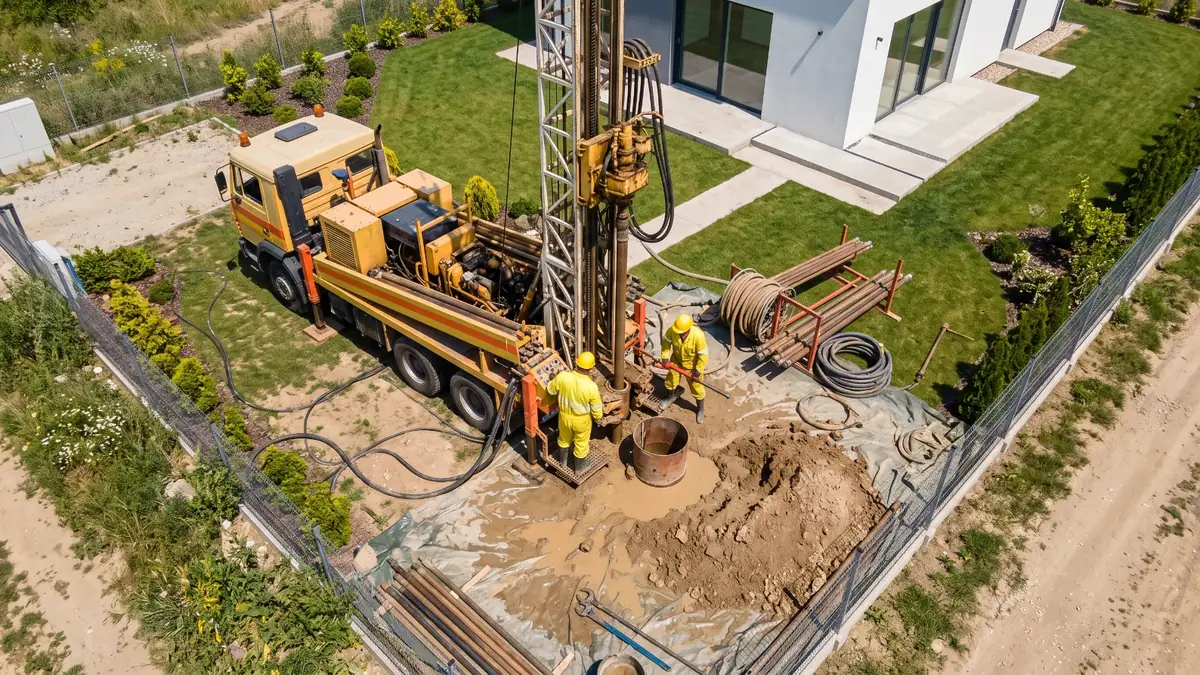
Borehole Repairs South Africa start with working out which of three things has gone wrong: the electrics, the pump, or the hole itself. A callout and a diagnosis come first, and the repair quote follows. Describe what the system is doing and compare callout rates and what each one covers.
- Know what a callout and a pump pull should cost, so you never pay too much.
- Describe the fault once, and quotes come back fast.
- From LEADERR APPROVED providers, vetted and backed by many verified 5-star reviews. Peace of mind that the diagnosis comes before the invoice.
Describe what the system is doing and get repair quotes.
Get the Best QuoteBorehole Repairs Prices
Ballpark figures so you can check a quotation.
| Item | Ballpark price |
|---|---|
| Callout and diagnosis, metro | R850 - R2,200 |
| Callout and diagnosis, outside the metro | R1,500 - R4,500 |
| Control box or capacitor replacement | R1,200 - R6,500 |
| Pump pull and refit, same pump | R4,500 - R12,000 |
| Replacement submersible pump, domestic, installed | R18,000 - R48,000 |
| Motor rewind, where worthwhile | R6,500 - R22,000 |
| New rising main and cable, per metre | R120 - R320 |
| Recovery of a dropped pump | R6,500 - R35,000 |
| Non return valve replacement | R900 - R3,500 |
Prices JUST UPDATED. Ballpark figures, rounded, excluding VAT. They reflect typical South African borehole drilling, pump and water treatment rates. They are not our prices or quotations, and no provider is bound by them. Drilling is quoted PER METRE and the depth is not known until the hole is down, so confirm what each quotation includes, such as mobilisation, casing, development and what you pay if no water is found.
What Usually Fails
- The control gear. A tripped breaker, a failed capacitor or a burnt contactor. The cheapest and most common fix.
- The cable. Damaged insulation down the hole, or corroded joints at the headworks.
- The pump itself. Worn stages give low flow. A burnt motor gives nothing and trips the board.
- The rising main. Corroded galvanised pipe splits or parts. The pump then pumps into the hole.
- The non return valve. A failed valve lets the column drain back and the pump restarts constantly.
- The hole. Silted up, collapsed casing or a dropped water level. A pump fault that is not the pump.
Reading the Symptoms
- No water, nothing trips. Usually electrical: supply, control box or cable, before anything is pulled.
- No water, breaker trips. Points at the motor or the cable. A resistance and insulation test tells which.
- Low flow. Worn stages, a partly blocked inlet, a split pipe or a hole giving less than it did.
- Runs then stops. Often dry run protection doing its job because the hole is being overpumped.
- Pump cycles constantly. A failed non return valve, a waterlogged pressure vessel or a leak.
- Sandy or cloudy water. Development has broken down or the casing has failed. That is a hole problem.
What a Repair Visit Involves
- Electrical test first. Measure at the board and the control box before anything comes out of the hole.
- The pull. Pump, pipe and cable lifted out, usually with a hoist or a rig for anything deep.
- Bench test. Insulation, winding resistance and flow, to decide repair against replace.
- Repair or replace. A rewind can be worth it on a larger pump. On a small domestic pump it rarely is.
- Refit and recommission. New rope and tape, pipe inspected joint by joint, and the protection reset.
Get a price for your own fault rather than a range.
Get the Best QuoteWhat Affects the Price
- What has failed. A capacitor is a fraction of a pump, and nobody knows which until it is tested.
- How deep the pump is. Depth decides whether it comes out on a tripod or needs a rig.
- The pipe material. Corroded galvanised comes out slowly and often does not go back.
- Travel. Distance from the depot, and whether it is an after hours callout.
- Whether the pump is repairable. A rewind can beat a replacement on larger pumps, rarely on small ones.
- Parts availability. A common domestic pump is on a shelf. An unusual one is a lead time.
What to Include in Your Request
- What the system is doing. No water, low flow, tripping, cycling or sand. Be specific.
- When it started. Suddenly, or gradually over months.
- The pump details. Make, size, age and setting depth if you have them.
- The hole details. Depth, water level and yield if you know them.
- What has been tried. Breakers reset, anything replaced recently, any other contractor on it.
- The address. Suburb and town, so travel can be priced.
Before You Appoint a Repairer
- Ask for diagnosis before replacement. A pump quoted sight unseen on a no water fault is a guess.
- Ask whether the callout is credited. Many contractors put it against the repair if you go ahead.
- Ask to see the old pump. And the test readings that condemned it.
- Ask why it failed. If the cause was oversizing or dry running, a new pump fails the same way.
- Insist on a new rope. If the old one was perished, that is how pumps get dropped.
- Get the warranty in writing. On the part and on the labour, separately.
Borehole Repairs FAQs
My borehole has stopped giving water. What is wrong?
In rough order of likelihood: the electrical supply or control gear, the cable, the pump motor, the rising main, or the hole itself having dropped below the pump. A competent repairer tests at the board and the control box before pulling anything, because roughly a third of no water callouts are solved without the pump leaving the hole.
How much does a borehole repair cost?
A callout and diagnosis runs around R850 to R2,200 in a metro. A control gear fault is often R1,200 to R6,500 all in. A pump pull and refit is roughly R4,500 to R12,000, and a replacement domestic pump installed is R18,000 to R48,000. The spread is why the diagnosis matters before anything is ordered.
Is it worth repairing a borehole pump or replacing it?
On a small domestic pump, a replacement is usually better value than a rewind once labour is counted. On a larger three phase pump a rewind can be well worth it. Either way, ask for the insulation and winding readings, because they are what the decision should be made on.
Why does my pump keep tripping the breaker?
Most often a fault in the motor windings or in the cable down the hole, which an insulation test will separate. It can also be a seized pump, a lost phase on a three phase supply, or a breaker that is undersized for the starting current. It is an electrical test, not a guess.
The flow has dropped off. Does that mean a new pump?
Not necessarily. Worn pump stages do cause it, but so do a split rising main, a partly blocked inlet, a clogged filter and a hole that is yielding less than it used to. Rehabilitation of the hole is sometimes the real answer, and a pump fitted to a silted hole will disappoint again.
Can I get someone out the same day?
In the metros, often. A property with no other water supply is treated as an emergency by most contractors and is charged at an after hours or priority rate. Say on the request that there is no alternative supply, because that is what moves a callout up the list.
Repairs are the most common request Borehole Drillers South Africa handles, because most boreholes need work long before they need replacing.
Related Services
Get the Best Quote, Fast
Client Reviews
Powered by leaderr