
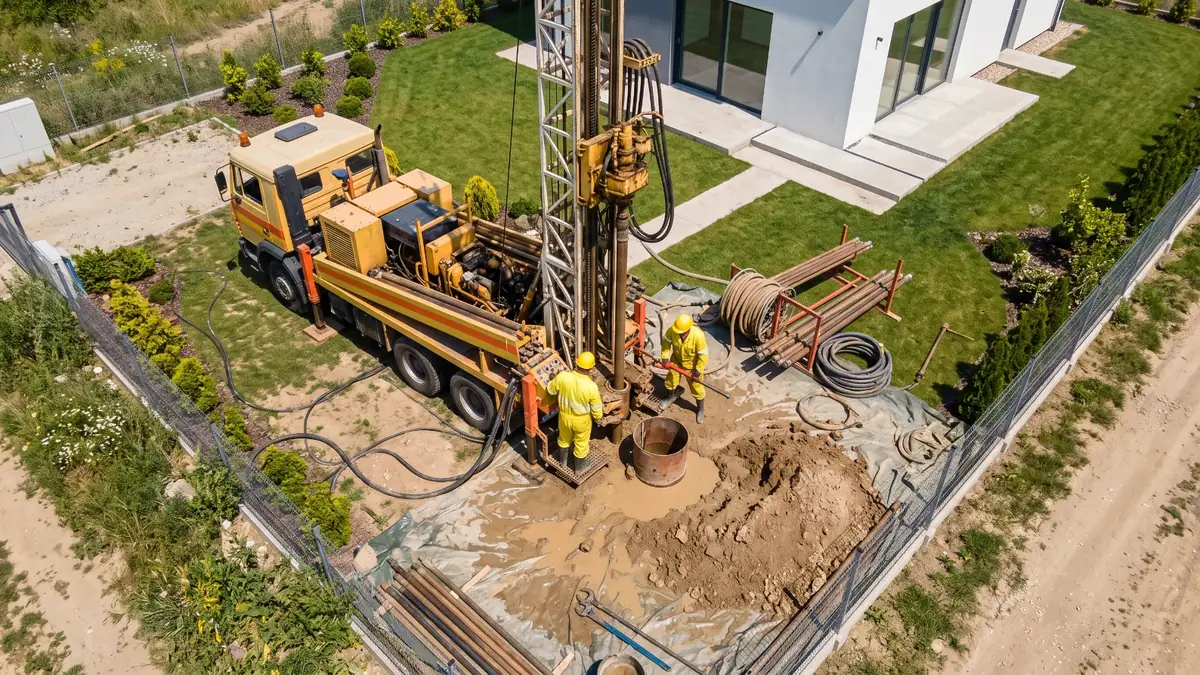
Do you already have a hole?
Borehole Installation South Africa is the whole system rather than the hole: the pump at the right depth, the rising main, the cable, the control box, a tank if you need one and the plumbing into the house or the irrigation. Compare turnkey quotations rather than a drilling rate on its own.
- Know what a full system should cost, so you never pay too much.
- Describe the property once, and quotes come back fast.
- From LEADERR APPROVED providers, vetted and backed by many verified 5-star reviews. Peace of mind that the whole system is signed off by one contractor.
Describe the property and what the water is for, and get installation quotes.
Get the Best QuoteBorehole Installation Prices
Ballpark figures so you can check a quotation.
| Item | Ballpark price |
|---|---|
| Submersible pump, 0.75kW, supplied and installed | R18,000 - R32,000 |
| Submersible pump, 1.5kW to 2.2kW, installed | R28,000 - R55,000 |
| Rising main, cable and rope, per metre | R120 - R320 |
| Control box with dry run protection | R2,500 - R9,500 |
| Sanitary well seal and headworks | R1,800 - R5,500 |
| 5,000 litre tank and stand, installed | R9,500 - R22,000 |
| Pressure pump and vessel for the house | R6,500 - R18,000 |
| Electrical connection and certificate of compliance | R3,500 - R12,000 |
| Turnkey domestic system, hole included | R70,000 - R150,000 |
Prices JUST UPDATED. Ballpark figures, rounded, excluding VAT. They reflect typical South African borehole drilling, pump and water treatment rates. They are not our prices or quotations, and no provider is bound by them. Drilling is quoted PER METRE and the depth is not known until the hole is down, so confirm what each quotation includes, such as mobilisation, casing, development and what you pay if no water is found.
What a Full Installation Includes
- The hole. Drilled, cased and developed, with a yield figure to size everything else off.
- The pump. A submersible set at a depth that keeps it below the water level and off the bottom.
- Rising main and cable. HDPE pipe and submersible cable down the hole, with a safety rope.
- The headworks. A sanitary well seal, a cap and a tap or meter at the top.
- Control and protection. A control box with dry run protection, which is what saves the pump.
- Storage and plumbing. A tank, a pressure pump and the run into the house, the garden or the irrigation.
Direct to Pressure or Through a Tank
- Straight to the house. Simplest, and it works if the yield comfortably beats peak demand.
- Through a storage tank. The borehole fills the tank slowly, a pressure pump feeds the house. Kinder to a low yield hole.
- Tank and float. A float switch stops the borehole pump when the tank is full and protects the hole.
- Municipal backup. A tank fed by both, with the correct backflow prevention so nothing goes back into the mains.
- Irrigation only. No pressure vessel needed. The borehole pump feeds the lines directly on a timer.
Getting the Depth Right
- Static water level. Where the water stands when nothing is pumping.
- Drawdown. How far it falls while pumping, which is what the yield test measures.
- Pump setting depth. Below the pumping level, above the bottom, with room for silt.
- Dry run protection. A probe or a current sensor that cuts out before the pump runs dry.
- Do not oversize. A pump bigger than the hole will pump it down and burn out. This is the usual cause of failure.
Get a turnkey price for your own property rather than a range.
Get the Best QuoteWhat Affects the Price
- The yield. A strong hole can feed the house directly. A weak one needs a tank, and that is extra kit.
- How deep the pump sits. Pipe, cable and rope are per metre, and a deep setting needs a stronger pump.
- The distance to the house. Trenching and pipe across a large stand adds up quickly.
- How much storage. Tanks, stands and the civil work under them are a significant line.
- The electrical work. A new circuit, a DB change or a long cable run, plus the compliance certificate.
- Filtration. If the water needs treating, that is a separate system on the outlet.
What to Include in Your Request
- The address. Suburb and town, so a contractor knows whether they cover it.
- Whether the hole exists. And if so, its depth, water level and yield.
- What the water is for. House, garden, pool top up, livestock or irrigation.
- Daily demand. Roughly, in litres a day, or the number of people and the garden size.
- The distance to the house. And whether there is a route for a trench.
- Whether you want municipal backup. It changes the tank and the plumbing.
Before You Appoint an Installer
- Ask what pump and why. Make, model, kilowatt and the yield figure it was sized from.
- Insist on dry run protection. It is cheap, and without it the first dry spell costs you a pump.
- Ask for the electrical certificate. A fixed pump installation needs a certificate of compliance.
- Get the warranty in writing. Pump warranties are usually void if it was installed wrongly, so one contractor for the lot is simpler.
- Ask about the safety rope. A pump dropped down a hole without one is a very expensive recovery.
- Keep the borehole log and test. The next contractor will need both, and they are yours.
Borehole Installation FAQs
What is the difference between drilling and installation?
Drilling gives you a cased hole with water in it. Installation is everything that turns that into water at a tap: the pump, the rising main, the cable, the headworks, the control box, storage if the yield needs it, and the electrical and plumbing connections. Many contractors do both, and some quote them separately.
How much does a complete borehole system cost?
For a domestic property, roughly R70,000 to R150,000 including the hole, depending on depth, yield, how far the house is and whether a tank is needed. The pump, pipe, cable, control gear and electrical work typically come to R30,000 to R70,000 on their own.
Do I need a storage tank?
Only if the hole cannot keep up with peak demand, which is common on low yield holes. A tank lets a hole that gives 500 litres an hour serve a house that wants 2,000 litres in the evening. It also protects the hole, because the pump runs steadily rather than being pulled hard twice a day.
Can borehole water be plumbed into the house?
Yes, and it is done routinely. If the house is also on municipal water the connection needs proper backflow prevention so nothing can flow back into the mains, and your municipality may have a specific requirement. Have the water tested against SANS 241 before it reaches a drinking tap.
How long does an installation take?
One to three days once the hole exists and the pump is on hand, longer if there is trenching across a big stand or electrical work at the board. The waiting is usually on the pump, the electrician or a tank delivery rather than on the installation itself.
Can the pump be installed later?
Yes. A cased, capped hole can stand for years before it is equipped. Make sure it is properly sealed at the top in the meantime: an open hole takes in surface water and debris, and cleaning that out later costs more than the cap would have.
A full system is what most people mean when they ask Borehole Drillers South Africa for a borehole price.
Related Services
Get the Best Quote, Fast
Client Reviews
Powered by leaderr