
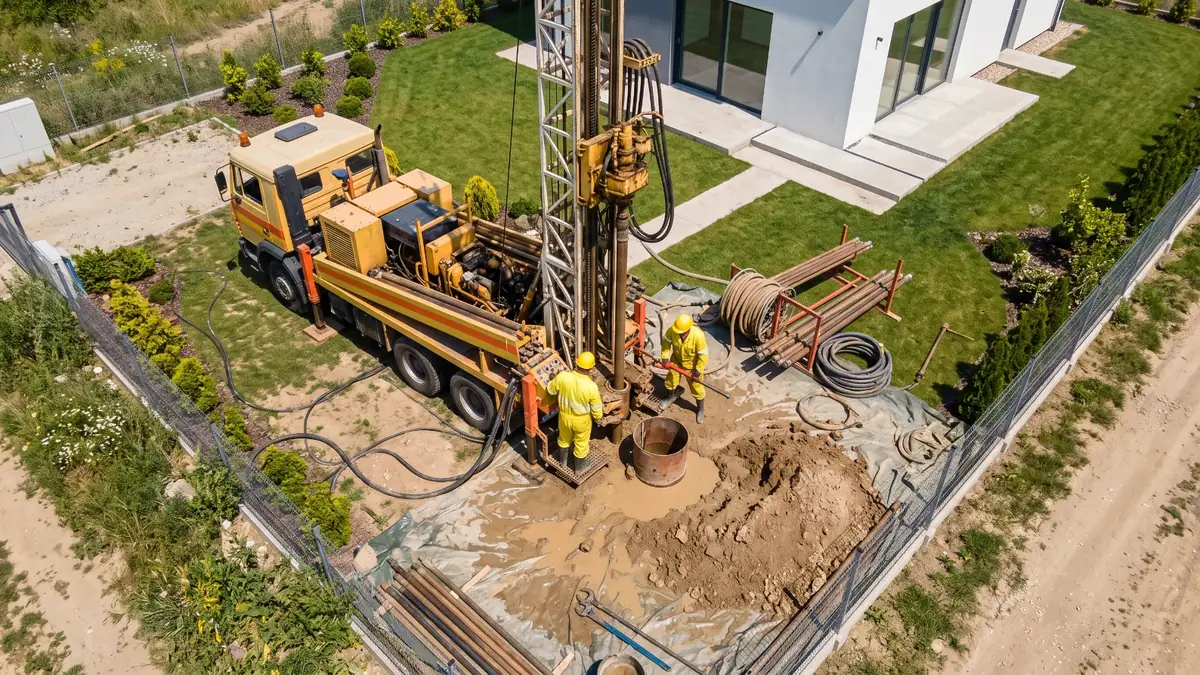
Borehole Drilling South Africa is the work of sinking a hole to an aquifer, lining it so it stays open, and leaving a hole a pump can be put down. Say where the property is and what the water is for, and compare what each contractor charges per metre, for casing and for the rig to get there.
- Know what a metre should cost in your area, so you never pay too much.
- Say where the property is and what the water is for, and quotes come back fast.
- From LEADERR APPROVED providers, vetted and backed by many verified 5-star reviews. Peace of mind that the rig arrives and the hole is cased properly.
Say where the property is and what the water is for, and get drilling quotes.
Get the Best QuoteBorehole Drilling Prices
Ballpark figures so you can check a quotation.
| Item | Ballpark price |
|---|---|
| Rate per metre drilled, domestic hole | R450 - R850 |
| uPVC casing, per metre supplied and installed | R220 - R480 |
| Mobilisation, within a metro | R2,500 - R6,500 |
| Mobilisation, rural or long haul | R6,500 - R25,000 |
| Typical 60m domestic hole, drilled and cased | R45,000 - R85,000 |
| Geophysical siting survey | R2,500 - R7,500 |
| Submersible pump and installation | R18,000 - R48,000 |
| Dry hole, where a quote charges for it | R15,000 - R40,000 |
Prices JUST UPDATED. Ballpark figures, rounded, excluding VAT. They reflect typical South African borehole drilling, pump and water treatment rates. They are not our prices or quotations, and no provider is bound by them. Drilling is quoted PER METRE and the depth is not known until the hole is down, so confirm what each quotation includes, such as mobilisation, casing, development and what you pay if no water is found.
What a Drilling Quote Covers
- Mobilisation. Getting the rig, the compressor and the water bowser onto the property. Charged on distance.
- The hole, per metre. The drilled depth, which is where most of the money goes.
- Casing, per metre. uPVC or steel lining that stops the hole collapsing and keeps surface water out.
- Development. Blowing the hole clear of cuttings and fines until the water runs clean.
- A yield figure. What the hole delivers in litres an hour, which sizes the pump.
- The pump and pipework. Often a separate quotation, and worth asking for at the same time.
Percussion or Rotary
- Air percussion. A hammer on the end of the string. The standard rig on hard rock, which is most of South Africa.
- Mud rotary. Used in sand and unconsolidated ground where a percussion hole will not stand open.
- Dual rotary. Drills and drives casing at once through collapsing overburden. Hired in for difficult sites.
- Hole size. 165mm is the common domestic size. Bigger holes take bigger pumps and cost more a metre.
- Depth. Most domestic holes land between 40 and 80 metres, but the rock decides, not the quote.
Before the Rig Arrives
- Get the site surveyed. A geophysical survey improves the odds of hitting water and is cheap against a dry hole.
- Check access. A truck mounted rig needs about three metres of width and firm ground to stand on.
- Mark the services. Water pipes, sewer lines, electrical and fibre. The driller is not liable for what nobody marked.
- Know the setbacks. Distances from boundaries, septic tanks and soakaways are set by your municipality.
- Plan the mess. Drilling throws out wet cuttings and mud. Decide where it goes before the hole starts.
- Register it. Boreholes are registered with the Department of Water and Sanitation, and some municipalities want to know as well.
Get a price for your own stand rather than a range.
Get the Best QuoteWhat Affects the Price
- How deep it has to go. The rate is per metre and the rock decides the depth, so the total is not known upfront.
- How far the rig travels. Mobilisation is charged on distance and is the biggest fixed item on a rural quote.
- The ground. Hard dolomite is slow going. Sand needs a different rig and more casing.
- How much casing. A hole through loose ground is cased most of its length rather than just at the top.
- Hole diameter. A wider hole costs more a metre and is only needed for a bigger pump.
- Access. A rig that has to be walked in, or a stand it cannot reach at all, changes the job.
- What happens on a dry hole. Some quotes charge the full rate, some a reduced one, some nothing. Ask first.
What to Include in Your Request
- The address. Suburb and town, so a contractor knows whether they work there.
- What the water is for. A garden, a house, livestock, irrigation or a business.
- How much you need. Roughly, in litres a day, or the area to be irrigated.
- Whether the site is surveyed. And if so, the recommended depth and position.
- The access. Whether a truck can reach the drilling spot, and the gate width.
- Whether there is an old hole. An existing dry or collapsed hole changes what is worth doing.
Before You Appoint a Driller
- Ask what happens if it is dry. In writing, before the rig books. This is the single biggest risk you carry.
- Ask for the yield in writing. Litres an hour, blown or test pumped, not an estimate from the driller's ear.
- Confirm the casing spec. Class and diameter, and how far down it goes.
- Ask about the borehole log. A record of what was drilled through and where the water came in. It is yours.
- Check the rig is insured. Damage to a driveway, a wall or a buried pipe is a real risk.
- Keep drilling and pumping separate. Two quotations compare better than one bundled figure.
Borehole Drilling FAQs
How much does it cost to drill a borehole in South Africa?
For a domestic hole, roughly R450 to R850 a metre for the drilling and R220 to R480 a metre for casing, plus a mobilisation charge. A 60 metre hole drilled and cased lands around R45,000 to R85,000 before the pump. The rate per metre is the quotable part; the depth is not, because the rock decides it.
How deep will my borehole be?
Nobody knows until it is drilled. Most domestic holes in South Africa land between 40 and 80 metres. A survey gives a target depth and a reason for it, but the driller follows the water, and a quote written per metre is the honest way to price that.
What happens if the hole is dry?
That depends entirely on what you agreed. Some contractors charge the full rate regardless, some a reduced dry hole rate, and a few carry the risk themselves on a surveyed site. Settle it in writing before the rig is booked, because it is the one term that can cost you tens of thousands with nothing to show.
Do I need permission to drill a borehole?
Reasonable domestic use is generally allowed under Schedule 1 of the National Water Act, and the borehole should be registered with the Department of Water and Sanitation. Larger abstraction for irrigation or commercial use needs a water use authorisation. Some municipalities, Cape Town among them, require registration with them too, and set minimum distances from boundaries and septic tanks.
How long does drilling take?
One to two days of drilling for a typical domestic hole once the rig is on site, plus development. A difficult hole, a deep one or one that needs casing driven can run longer. The waiting is usually for the rig to be free, not for the hole itself.
Will the water be drinkable?
Often, but never assume it. Borehole water can carry nitrates, iron, high hardness or bacteria depending on what is around and above the aquifer. Have it tested against SANS 241 before anyone drinks it, and again a year later.
How close to the house can it be drilled?
Close enough to shorten the pipe run, far enough that the rig can stand and the vibration is not against a foundation. A few metres clear of the building is normal. Your municipality sets the minimum distances from boundaries and from any septic tank or soakaway.
A new hole is the service nearly every contractor on Borehole Drillers South Africa leads with, alongside pumps, repairs and testing.
Related Services
Get the Best Quote, Fast
Client Reviews
Powered by leaderr